Showing posts with label Hubble. Show all posts

Monday, June 2, 2014

CAJ 8: The Hubble Telescope - Optics (part 3)


How is it possible that a telescope can view stars that are more hundred or even thousand light-years away? What optical device is capable of picturing galaxies that are so far away that we cannot even conceive the enormous distances?

It is not only the fact that it does not have to look through our polluted atmosphere, but also the "eyes" of Hubble. The eyes of Hubble have also a real name that is the Optical Telescope Assembly. This system is designed to offer the widest possible field of view. The system consists of two main mirrors, apertures and supporting trusses.

As the light strikes the telescope, it enters the tube, which prevents stray light to enter the telescope. After it entered the tube it passes the first optical glass. Than it strikes the first mirror that is shaped like an upside down bowl. This mirror is called the concave. Because of the shape of the mirror, it diverts the light and reflects it to the centre of the optical glass in which the second convex shaped mirror can be found. This mirror directs the light again to the first mirror. The first mirror has a hole in the Center where the light can enter and can reach its focal point right where the science instruments are placed. This basic model is called the
Ritchey-Chretien Cassegrain. 

The main mirror measures 2.4 meters in diameter. The smaller mirror that redirects the light towards the science instruments is only 0.3 meters in diameter. The focal plane where the light gets picked up is roughly the size of a dinner plate. 

The mirrors are developed in a very special way. They are treated with abrasives so that the surface of the mirrors is perfectly smooth. The mirrors are designed so that they do not deviate from a perfect curve by more than 1/800,000th of an inch. To help you understand this I use an example. The mirrors are so smooth that if the mirror were as big as the Earth in Diameter, the biggest bump would be 6 inches tall. 
The mirrors are made of ultra-low expansion glass and are kept constantly at the same temperature. This prevents the glass from cracking or warping. The surfaces are coated with a very thin layer of aluminum and a similarly thin layer of protecting magnesium-fluoride. The magnesium-fluoride allows the mirrors to be even more reflective to ultraviolet light. 

In the first post I already mentioned the first problems of the telescope with the mirrors and blurry images. This was because of the primary mirror. After the telescope was launched and the first images were sent to Earth, it became apparent that something is wrong with the telescope as the images are all very blurry. This was because the primary mirror had a flaw called spherical aberration. The outer edge of the mirror was four microns flatter than intended. Four microns equal approximately one-fiftieth of a single human hair.


During the first servicing mission this problem was solved by putting small corrective mirrors on the primary mirror. After this the images became much sharper and the telescope could start to function properly. During the fourth servicing mission the corrective mirrors were replaced by an instrument called Cosmic Origins Spectrograph. This device breaks down the light reaching the telescope. By analyzing these light waves, scientists can determine the density and chemical components of a planet. This technology was a major development and improved the telescope's sensitivity up to 10 times, especially the sensitivity to ultra-violet light. 

Monday, May 26, 2014

CAJ 7: The Hubble Space Telescope / The Spacecraft (part 2)


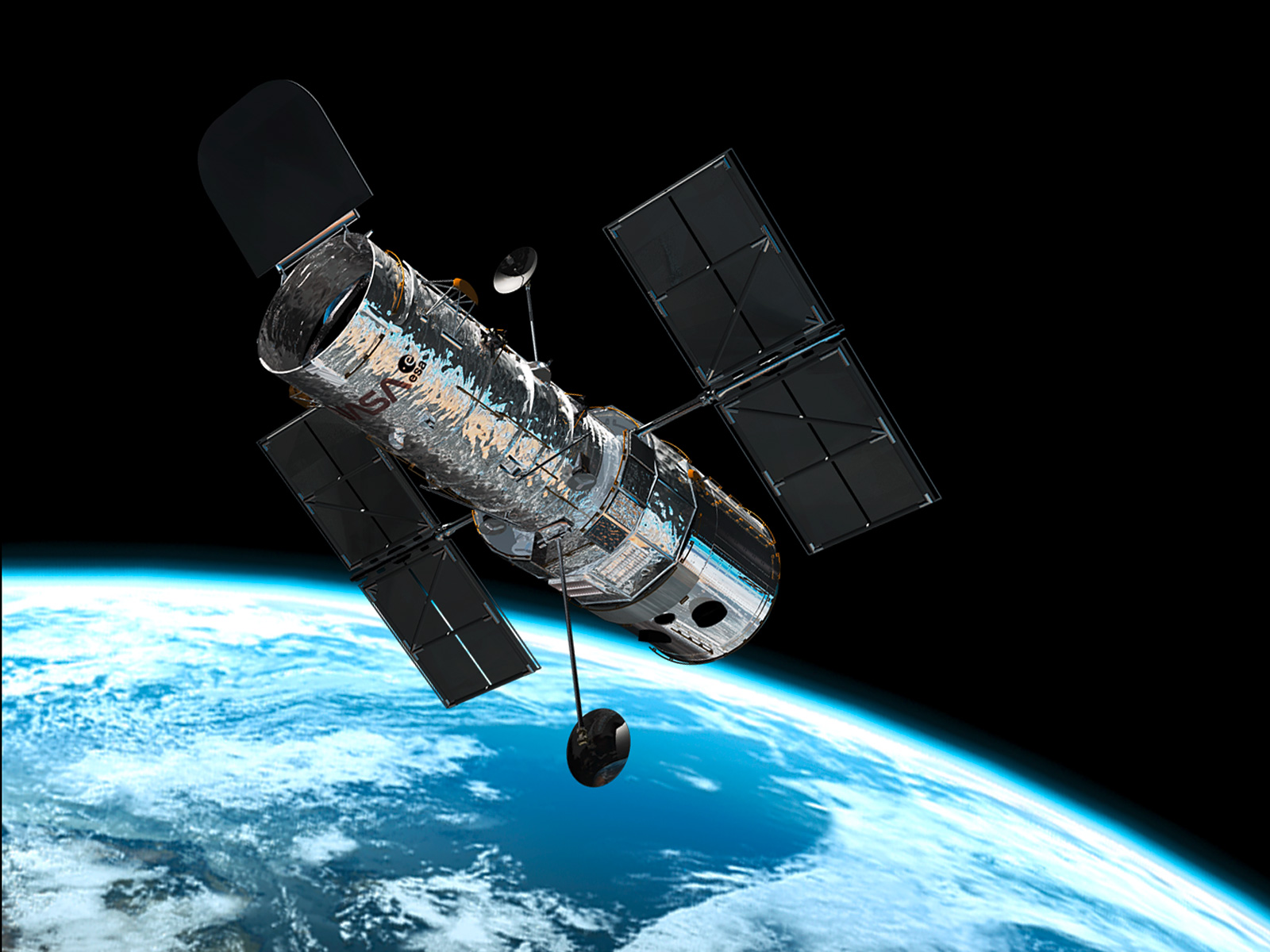
In my last post I introduced the Hubble Space Telescope and its importance for planetary science and humanity in general. In this post I would like to introduce the telescope in somewhat more detail. I will take the Spacecraft apart, to introduce every aspect of this significant apparatus individually.

As Hubble is the first telescope in space, it was a forerunner in every sense. The outer-space conditions are often severe and to achieve the best results possible and to maintain the high performance of the telescope several spacecraft support systems are in place to keep the telescope functioning.  Over the operation time of Hubble, it had experienced many major upgrades to ensure that the telescope is always in compliance with the latest advancements of technology. To introduce the technology behind it, I am going to separate the spacecraft systems according to Housing, Communication, Power, Computers.


The Housing:

The Housing of the telescope is basically the flesh and bones of the Spacecraft. It is the layer that protects it from the severe conditions in space and the skeleton that houses every single instrument. For example, solar winds and  sudden changes in temperature are very frequent conditions that can come very sudden and unexpected. Therefore, the telescope has to be equipped with the appropriate technologies to protect it.

The multi-layered insulation (MSI) on the telescope makes it appear as if it would be covered with Gold. It is a layer that protects the telescope from thermal radiation and dust impacts. The layer consists of many sheets, often with a solid layer, for example beta cloth, which is a fireproof silica fiber cloth.

Another layer of insulation was added during a servicing Mission in 2009. The New Outer Blanket Layers (NOBLs). This layer consists of sixteen thin layers of dimpled aluminized Kapton material that are covered by an outer aluminized Teflon shell. This layer serves to protect the telescope from radiation and prevents the inner systems from overheating by simply reflecting the sun rays.

Under these layers is the Skeleton of the telescope. It is a light-weight aluminum shell that holds the parts together. It houses the optical devices and the supporting instruments.


Power:
The Telescope is powered by sun rays, as it could hardly be connected to Earth. As the telescope has to power radio transmitters, computers and scientific instruments, it requires much electricity. On the side of the tube (optics, main body), two blue solar arrays are installed that are covered in a solar cell blanket. These wing-like arrays convert sunlight into electricity. These arrays are designed to be easily replaced by an astronaut. They can even be folded for shuttle trips.
The telescope has also batteries that ensure that it can operate while it orbits in Earth`s shadow.

Communication:


Hubble receives instructions from the Flight Operations Team at Goddard Space Flight Center in Greenbelt, Md., and it performs the actions according to the instructions. With a very sensitive antenna it can capture the transmitted signs and send the data to Earth. It transmits the collected data to a Tracking and Data Relay System (TDSR) that consists of five satellites. These satellites then transmit the data to Earth. The telescope has to be in line of sight with at least on of the five satellites to transmit and receive information. While it is in line of sight of one satellite, scientist can perform direct changes in the pointing of the telescope and fine tune their observations. 
(As the telescope receives the commands well in advance, this is usually not necessary.)

In case a satellite is not in sight, the telescope has a special data recorder that can store the information until the satellite is in sight again.

Computers and Automation:

In order to run properly, the Hubble Telescope requires many computers and microprocessors.  It is equipped with two main computers that look like the belt that surrounds the main body of the telescope. One of which is responsible for the communication, the receiving and sending of data and forwarding the instructions to the individual instruments. The other main computer runs the gyroscopes, the pointing system, the optical devices (will be explained in another post) and other system-wide functions. There are also additional backup computers that keep Hubble safe in the event of a problem.

There are many more small computers in the individual parts of the telescope that help to collect the data, open and close the exposure shutter,  direct the rotation of the filter wheels and maintain the temperature of the instruments. These smaller computers and microprocessors are all connected to the main computers.


Further posts about the optical devices and how they function will follow.
Take care,
Harald

Tuesday, May 20, 2014

CAJ 6 - The Importance of The Hubble Telescope (post 1)


From Greek philosophers to scientists of the Renaissance, all looked up at the sky to find answers for questions yet undiscovered. The Universe and its undiscovered mysteries were always a major source of inspiration and one of the biggest question of humankind.

When in 1990 the NASA launched its first space telescope named Hubble, we came one step closer to the answer of our questions. The launch of the telescope marked the most significant advance in astronomy and planetary science since Galileo directed his telescope to the sky.

Everything began in 1962, when the National Academies of Science put forward a request for developing a space telescope. Only in the 70's did the NASA devote attention to this idea. Bob O'Dell was the first project scientist of the Hubble project, which at time was not even funded. Many years O'Dell worked tirelessly on promoting the idea to the NASA but they did not believe in the feasibility and the advantage of observing our Galaxy outside of our atmosphere. Finally in 1983 the Space Telescope Science Institute was established and seven years later they launched Hubble, the first telescope in space.

As the mirror of the telescope had the wrong shape on the edges, the first pictures appeared blurry. Another problem, which the scientists did not consider, was the shaking of the telescope due to the strong blow of solar winds. Luckily the telescope was designed to be serviceable constantly. Therefore, three years later in 1993 the mirror of the telescope was upgraded and the image appeared sharp. Since then the telescope has been upgraded numerous times and is always kept up-to-date with recent inventions.


The contribution of the Hubble telescope is unquestionable. Many discoveries and  theories emerging from those discoveries can be attributed to it. Hubble provided evidence that the Universe's expansion was accelerating. This was a milestone for physics, as till then scientists believed that it was slowing. This was achieved by observing a dying star. By observing this supernova, scientists could calculate its distance that was much farther away than predicted.
For physics this meant a discovery as important as General Relativity.

Connected to the observation of supernovas, the Hubble telescope also contributed to another big discovery. Dark matter is one of the biggest clues of science. The Hubble Telescope was constantly observing the violent death of stars. The light of these dying stars was spotted and their distance could be calculated. These distances are bigger than expected and without the added force of dark matter, the Universe could not expand so fast.

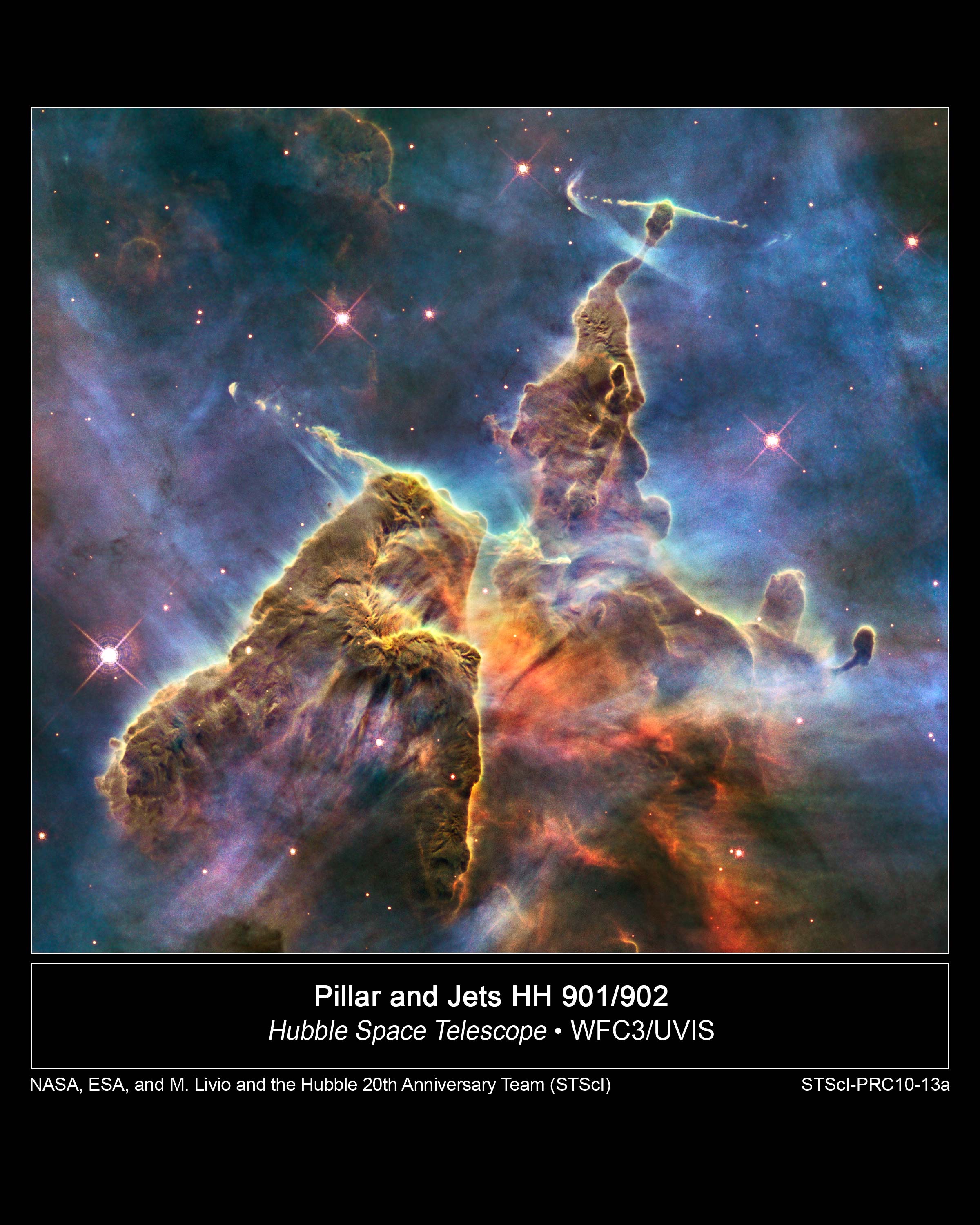
The Hubble Telescope revealed us how unbelievably complex and beautiful our Universe is. It captured images of Galaxies and dying Stars and phenomenoms that are still unexplained.


More about the importance, discoveries and achievements of the Hubble Telescope will follow.